

 Wood Pressed Oils
 Coconut Oil
 Natural Honey
 Forest Honey
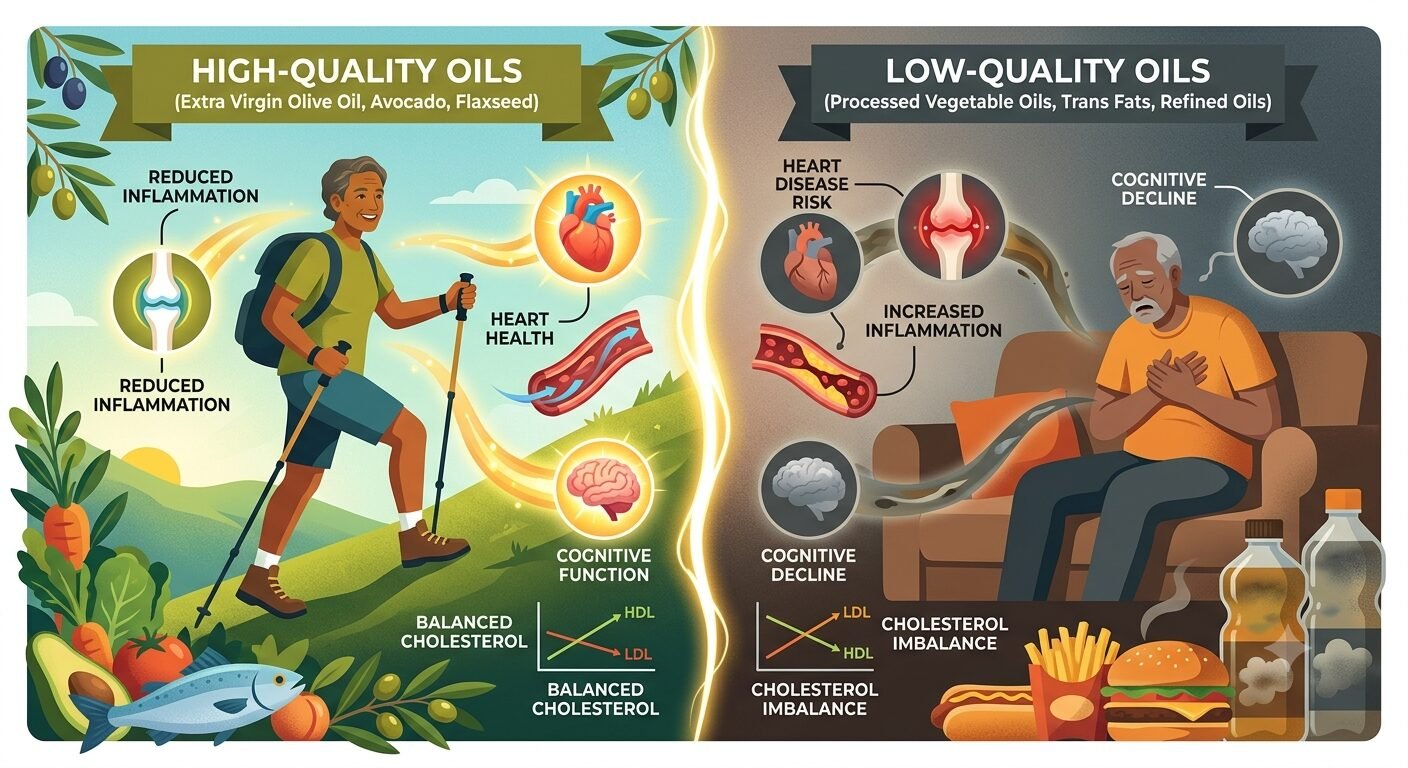
When people think about eating healthy, they usually picture vegetables, lean proteins, and whole grains. The oil sitting in the kitchen cabinet rarely gets a second thought — yet it’s one of the most frequently consumed ingredients in the average diet. Almost every meal, whether cooked at home or eaten out, involves some form of oil. Over months and years, the quality of that oil can have a real and measurable impact on your health.
This post breaks down why oil quality matters, what happens inside your body when you consume low-quality oils regularly, and how to make smarter choices for the long run.
Why Oil Quality Deserves More Attention
Not all oils are created equal. Two bottles labeled “cooking oil” can differ enormously in how they were extracted, refined, stored, and processed before they reach your plate. These differences affect:
- The nutrients retained (or destroyed) during processing
- The presence of harmful byproducts like trans fats and oxidized compounds
- How the oil behaves when heated
- The balance of fatty acids your body absorbs
Because oil is consumed daily, even small quality differences compound over time — which is exactly why long-term health outcomes are so closely tied to the oils you choose.
How Oil Quality Affects the Body Over Time
1. Oxidation and Free Radical Damage
Oils, especially those high in polyunsaturated fats, are prone to oxidation when exposed to heat, light, and air. Oxidized oils generate free radicals — unstable molecules that can damage cells and contribute to inflammation. Low-quality oils that have been sitting on store shelves for extended periods, or oils that are reused for frying, are particularly susceptible to this process. Regular consumption of oxidized fats has been linked by researchers to increased oxidative stress in the body, a factor associated with accelerated aging and various chronic conditions.
2. Trans Fats from Industrial Processing
Many refined and partially hydrogenated oils contain trace amounts of trans fats, formed during high-heat industrial processing. Trans fats are widely recognized by health authorities as harmful to cardiovascular health because they raise “bad” LDL cholesterol while lowering “good” HDL cholesterol. Choosing minimally processed, cold-pressed, or unrefined oils significantly reduces this risk.
3. Loss of Natural Nutrients
High-quality oils — particularly those that are cold-pressed or minimally refined — retain beneficial compounds like antioxidants, vitamin E, and polyphenols. Heavy refining processes, which involve high heat, chemical solvents, and bleaching, strip away these nutrients. Over years of consumption, the difference between nutrient-rich and nutrient-stripped oils can influence everything from skin health to immune function.
4. Omega-6 to Omega-3 Imbalance
Many mass-produced, low-cost oils are extremely high in omega-6 fatty acids relative to omega-3s. While omega-6 fats aren’t inherently bad, a heavily skewed ratio — common in modern diets dominated by refined seed oils — is associated with increased inflammatory markers in the body. Choosing oils with a more balanced fatty acid profile, or diversifying oil sources, can help support a healthier inflammatory balance over time.
5. Heat Stability and Cooking Method Mismatch
Every oil has a smoke point — the temperature at which it starts to break down and release harmful compounds like acrolein. Using a low-quality or inappropriate oil for high-heat cooking (like deep frying) accelerates degradation and the formation of harmful byproducts. Matching oil type to cooking method is a simple but often overlooked way to protect long-term health.
Long-Term Health Risks Linked to Poor-Quality Oils
Consistently consuming low-quality, heavily processed, or repeatedly heated oils has been associated in scientific literature with:
- Increased risk of cardiovascular disease
- Elevated chronic inflammation
- Higher oxidative stress and accelerated cellular aging
- Potential links to metabolic issues, including insulin resistance
- Skin and gut health disturbances due to nutrient depletion and inflammatory load
It’s important to note that oil is just one piece of a much larger dietary picture — overall diet, lifestyle, and genetics all play a role. But given how often oil is consumed, improving its quality is one of the highest-leverage changes you can make.
How to Choose Better-Quality Oils
- Look for cold-pressed or unrefined options. These retain more nutrients and undergo less chemical processing.
- Check the extraction method. Expelled-pressed or mechanically extracted oils are generally preferable to chemically solvent-extracted ones.
- Store oils properly. Keep oils away from heat and direct light, and use dark glass bottles when possible to slow oxidation.
- Match the oil to the cooking method. Use oils with higher smoke points for frying and sautéing, and reserve delicate, nutrient-rich oils for dressings or low-heat cooking.
- Avoid reusing frying oil. Repeated heating dramatically increases harmful compound formation.
- Check for freshness. Rancid oil has a distinct off smell — trust your senses and discard old stock.
- Diversify your oils. Rotating between different high-quality oils helps balance your fatty acid intake rather than relying on a single source.
The Bottom Line
Oil quality isn’t a minor detail — it’s a daily variable that quietly shapes your long-term health. Because oil touches nearly every meal, upgrading to cleaner, minimally processed options is one of the simplest and most impactful dietary changes you can make. Small, consistent choices in the kitchen — the oil you cook with, how you store it, and how you use it — add up to significant differences in well being over the years.
Making the switch to purer, higher-quality oils isn’t about chasing a trend; it’s about giving your body what it needs to function well for the long haul.
Explore more health and wellness insights on the Live With Purity blog.