

 Wood Pressed Oils
 Coconut Oil
 Natural Honey
 Forest Honey
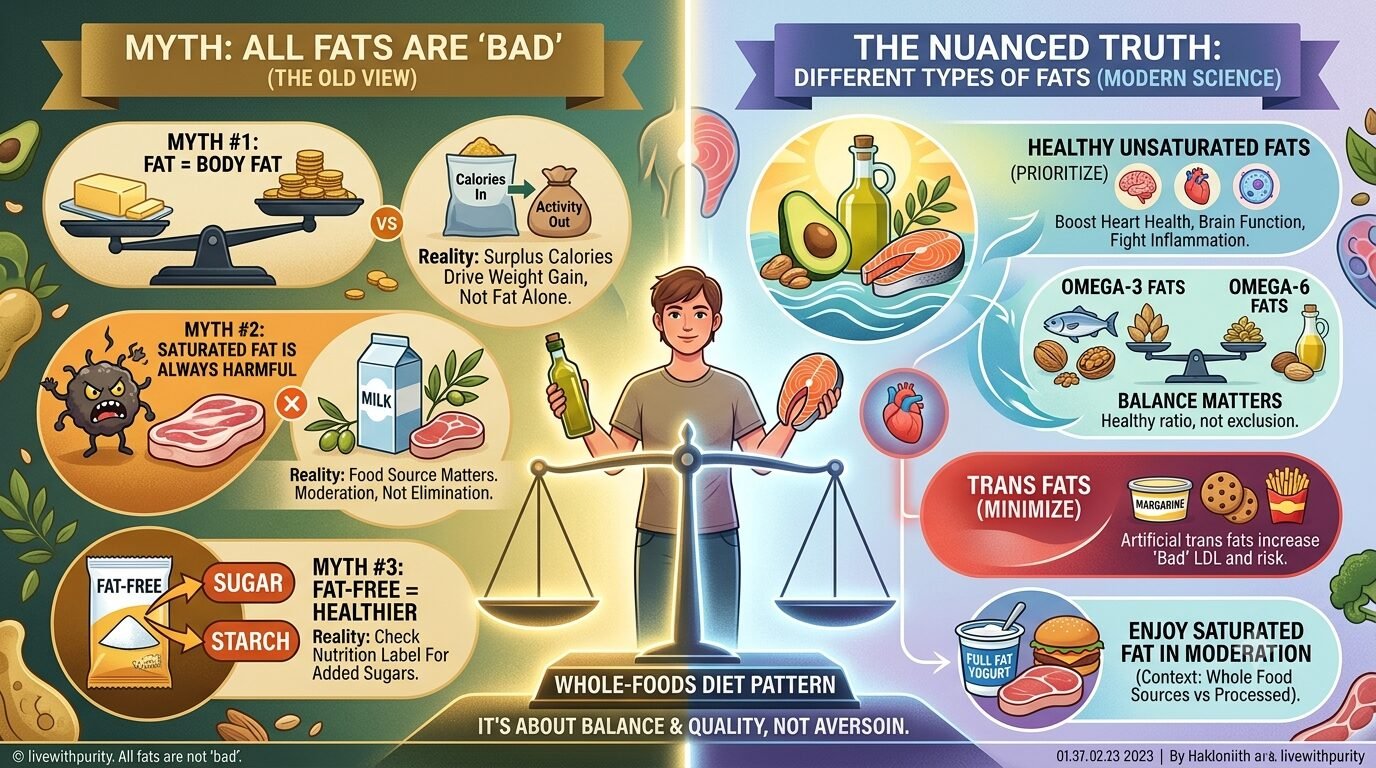
For decades, “fat” has been treated like a dirty word. Low-fat diets lined supermarket shelves, fat-free snacks were marketed as health foods, and an entire generation grew up believing that cutting fat from their plate was the fastest route to a healthy heart and a leaner body. But nutrition science has moved on — and the truth about dietary fat is far more nuanced than “good” versus “bad.”
Let’s separate fact from fiction and take a closer look at what fat actually does in your body, which types deserve a place on your plate, and which ones genuinely warrant caution.
Myth #1: “All Fat Makes You Fat”
This is probably the most persistent fat myth out there. The logic seems simple: fat has more calories per gram than protein or carbohydrates (9 calories versus 4), so eating fat must directly translate into body fat.
The reality: Weight gain is driven by a sustained calorie surplus — eating more energy than your body uses — not by any single macronutrient in isolation. In fact, healthy fats play an important role in weight management. They slow digestion, increase satiety, and help you feel fuller for longer, which can reduce overall calorie intake throughout the day. Diets that eliminate fat entirely often lead people to overeat refined carbohydrates and sugar instead, which can be just as problematic for weight and metabolic health.
Myth #2: “Saturated Fat Is Always Harmful”
Saturated fat has long been cast as the villain of heart disease. It’s found in foods like butter, red meat, full-fat dairy, and coconut oil, and for years, guidelines encouraged strict limits on all of it.
The reality: The picture is more complicated than a blanket “avoid at all costs” rule. Some research suggests that the effect of saturated fat on heart health depends heavily on the food source and what it replaces in the diet. Saturated fat from whole foods like dairy or unprocessed meat appears to behave differently in the body than saturated fat from heavily processed foods. That said, most major health bodies still recommend moderating saturated fat intake and prioritizing unsaturated fats where possible — the key word is moderation, not elimination.
Myth #3: “Fat-Free Products Are Automatically Healthier”
Walk down any grocery aisle and you’ll see “low-fat” or “fat-free” stamped proudly on packaging. It’s easy to assume these products are the smarter choice.
The reality: When fat is removed from processed foods, it’s often replaced with added sugar, refined starches, or artificial thickeners to maintain flavor and texture. This means many “fat-free” products aren’t necessarily lower in calories — and they may spike your blood sugar more than the full-fat version would. Reading the nutrition label, not just the front-of-pack claims, is the only reliable way to judge a product’s actual healthfulness.
Myth #4: “Trans Fats Aren’t That Big a Deal”
Unlike saturated fat, this is one category where the science is unambiguous.
The reality: Artificial trans fats — created through a process called partial hydrogenation and historically found in margarine, packaged baked goods, and fried fast food — are consistently linked to increased LDL (“bad”) cholesterol, decreased HDL (“good”) cholesterol, and a higher risk of heart disease. Many countries have banned or heavily restricted artificial trans fats in the food supply, but it’s still worth checking ingredient labels for “partially hydrogenated oils” and minimizing these foods where they still appear.
Myth #5: “Unsaturated Fats Are the Only Fats Worth Eating”
Once people learn that unsaturated fats — found in olive oil, avocados, nuts, seeds, and fatty fish — are linked to better heart health, it’s tempting to swing to the other extreme and treat all saturated fat as equally dangerous, or to obsess over “good fat only” eating.
The reality: Balance matters more than exclusion. A diet built around whole, minimally processed foods will naturally include a mix of fat types — and that’s a good thing. Omega-3 fatty acids (found in salmon, walnuts, flaxseed, and chia seeds) are particularly valuable, supporting brain function, reducing inflammation, and contributing to cardiovascular health. Omega-6 fatty acids, found in many vegetable oils, are also essential — the goal is a healthy balance between the two, not the total avoidance of either.
So, What Should You Actually Do?
Rather than sorting fats into rigid “good” and “bad” categories, it’s more useful to think in terms of quality and context:
- Prioritize whole-food fat sources: olive oil, avocados, nuts, seeds, and fatty fish.
- Enjoy saturated fat in moderation, especially from minimally processed sources like dairy and quality cuts of meat.
- Minimize artificial trans fats wherever possible by checking ingredient labels.
- Don’t fear fat-free labels — read them. A product being low in fat doesn’t automatically make it a better choice.
- Think about your overall dietary pattern, not individual nutrients in isolation. A diet rich in vegetables, whole grains, lean proteins, and healthy fats will outperform any single “fat rule” every time.
The Bottom Line
Fat isn’t the enemy it was once made out to be. Like most things in nutrition, the truth lives in the details: the source of the fat, how it’s processed, and what it replaces in your diet all matter more than simply counting grams of fat on a label. By moving past outdated all-or-nothing thinking and focusing on whole, nutrient-dense foods, you can build a diet that supports your heart, your energy levels, and your long-term health — without unnecessary fear of the fat on your plate.
This article is for informational purposes only and is not a substitute for personalized advice from a qualified healthcare provider or registered dietitian.
For more myth-busting health content, visit us at livewithpurity.com/blog