Wood Pressed Oils
 Coconut Oil
 Natural Honey
 Forest Honey
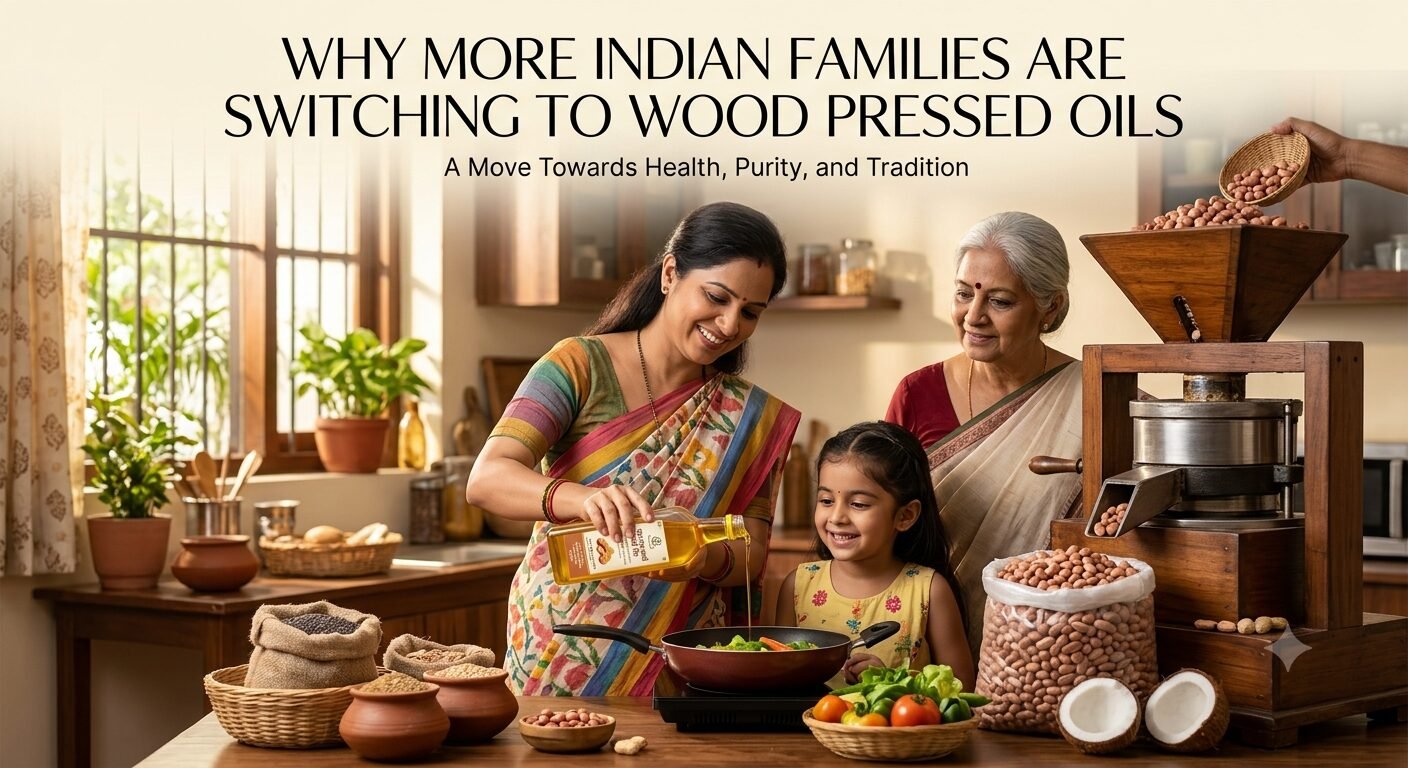
Walk into any Indian kitchen today and you’ll notice something changing quietly on the shelf. The familiar plastic bottle of refined oil is being pushed aside for a glass jar of golden, aromatic, wood-pressed oil. This isn’t a passing trend — it’s a return to how our grandparents cooked, backed by a generation that’s finally asking the right question: what exactly am I putting in my food?
Across cities and small towns alike, Indian households are rethinking their cooking oil the same way they once rethought sugar, salt, and processed snacks. Here’s why.
1. Health Consciousness Has Reached the Kitchen
For years, Indian diets were shaped around convenience — refined, deodorized, bleached oils that promised a longer shelf life and a “healthier” tag on the label. But as diabetes, heart disease, and obesity rates have climbed, families have started scrutinizing the fine print.
Refined oils go through high-heat processing and chemical solvents like hexane to extract and clarify the oil. In the process, much of the natural nutrition — vitamin E, antioxidants, and healthy fatty acids — gets stripped away, along with the oil’s natural aroma and flavor. Wood-pressed oil (also called kachi ghani oil), on the other hand, is extracted at low temperatures using a wooden churner, so the oil retains its natural nutrients, color, and taste — much closer to what nature intended.
For families trying to eat cleaner without overhauling their entire diet, switching the cooking oil is often the easiest first step — and one of the most impactful.
2. Growing Distrust of “Refined” and “Adulterated” Labels
Adulteration scandals involving cooking oil have made headlines in India for decades, from mixing cheaper oils to selling recycled restaurant oil as fresh. Even when oils aren’t outright adulterated, refining involves chemical solvents, high heat, and additives that many consumers no longer want in their food.
This has led to a broader distrust of anything labeled “refined” or “purified” — words that once sounded reassuring but now raise questions. Families are increasingly drawn to oils where the entire process is transparent: no chemicals, no synthetic additives, and no industrial shortcuts. Wood-pressed oils, extracted mechanically at low speed and low heat, offer exactly that — a product you can trust because you can (almost) see how it was made.
3. A Return to Traditional, Time-Tested Methods
There’s a quiet wisdom in the way earlier generations cooked. Before industrial refining became the norm, Indian households relied on oil pressed the traditional way — using a wooden ghani (churner) that crushed seeds slowly, without generating excess heat. This method preserved the oil’s natural nutrients and gave it a distinct, rich flavor.
As more people research nutrition and cooking practices, this traditional method is being rediscovered — not as an old-fashioned habit, but as a scientifically sound one. Low-heat extraction protects heat-sensitive nutrients and antioxidants that are otherwise destroyed during high-temperature refining. It’s a case where “the old way” genuinely holds up under modern scrutiny.
4. Better Taste and Aroma That Enhances Everyday Cooking
Ask anyone who has switched to wood-pressed oil, and taste is usually the first thing they mention. Refined oils are largely flavorless and odorless by design — that’s the point of refining. Wood-pressed oils, however, carry the natural aroma and taste of the seed or fruit they came from: the earthy richness of mustard, the subtle sweetness of groundnut, or the tropical warmth of coconut.
For Indian cooking, where oil isn’t just a cooking medium but a flavor base for tempering, sautéing, and finishing dishes, this difference matters. Many home cooks say their food simply tastes more authentic — closer to how it did at their grandmother’s house.
5. Rising Awareness Around Chronic Health Conditions
India has one of the highest rates of diabetes and heart disease in the world, and diet plays a significant role in both. Refined oils, especially when reused or heated repeatedly, can produce harmful compounds and trans fats that are linked to inflammation and cardiovascular issues.
Wood-pressed oils are cold-pressed at low temperatures and are less processed, meaning they retain healthier fat profiles and are generally considered gentler on the heart when used mindfully. For families with a history of lifestyle diseases, this has become a genuine, practical reason to switch — not just a wellness trend, but a preventive health decision.
6. Skincare and Haircare Benefits Beyond the Kitchen
Interestingly, many Indian households didn’t discover wood-pressed oils through cooking at all — they discovered them through skincare and haircare. Cold-pressed coconut oil, in particular, has long been a staple for hair oiling, massage, and moisturizing in Indian homes.
Because wood-pressed oils retain more of their natural compounds, they tend to work better for topical use too — nourishing skin and hair without the synthetic residue that refined or heavily processed oils can leave behind. Once families notice the difference in quality for skincare, it’s a natural next step to bring the same purity standard into the kitchen.
7. Supporting Sustainable and Ethical Sourcing
There’s also a growing awareness of how food is produced, not just what’s in it. Wood-pressed oil production typically involves smaller-batch extraction, less energy-intensive processing, and support for local farmers and traditional oil-pressing communities — a stark contrast to large-scale industrial refining.
For families who care about where their food comes from and want to make choices that support sustainable, ethical supply chains, wood-pressed oil checks that box too.
Making the Switch: What to Look For
If you’re considering the switch, here’s what to check before buying:
- Extraction method — Confirm the oil is genuinely cold/wood-pressed, not just labeled as such.
- No additives or preservatives — The ingredient list should be short: just the seed or fruit it came from.
- Packaging — Oils are best stored in glass rather than plastic, which can leach chemicals over time.
- Certifications — Look for FSSAI approval and clear sourcing information from the brand.
- Aroma and clarity — Genuine wood-pressed oil usually has a natural color and a distinct smell — it shouldn’t look perfectly clear and odorless like refined oil.
The Bottom Line
The shift toward wood-pressed oils isn’t just about following a trend — it’s about Indian families reclaiming a simple, everyday choice that has an outsized impact on health. As more people learn how refining strips oils of their nutrition, and as concerns around adulteration and chronic illness grow, the appeal of a purer, more traditional alternative only becomes stronger.
At the end of the day, it comes down to a simple question every family is starting to ask: would you rather cook with something processed in a factory, or something pressed the way nature — and your grandparents — always intended?
At Live With Purity, we bring you 100% natural, chemical-free wood-pressed oils and raw forest honey, made using traditional methods and delivered straight to your doorstep. Explore our range of wood-pressed oils and taste the difference purity makes.