

 Wood Pressed Oils
 Coconut Oil
 Natural Honey
 Forest Honey
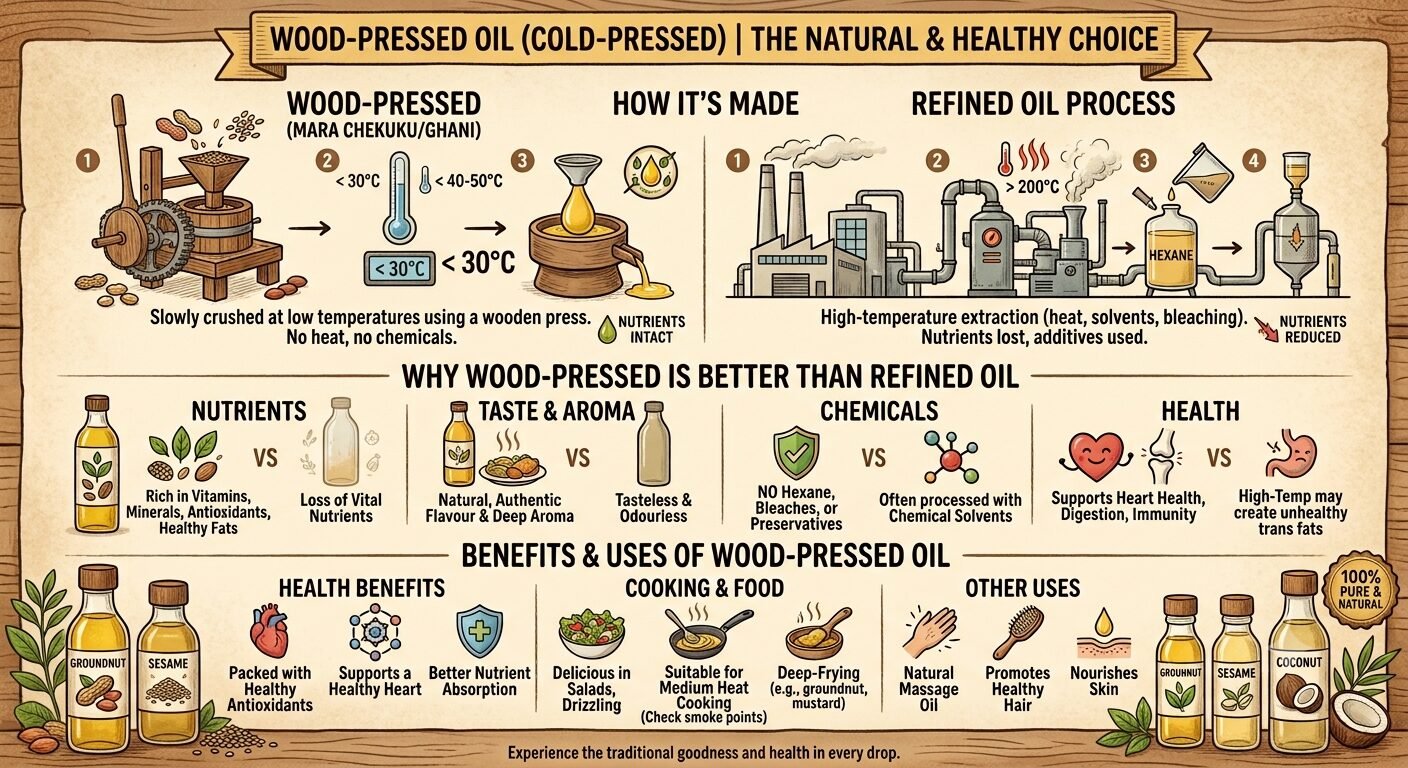
In the modern kitchen, we are often overwhelmed by rows of clear, uniform cooking oils. However, a return to traditional wisdom is changing how we cook. Wood-pressed oil (also known as Kachi Ghani or Chekku oil) is quickly becoming the gold standard for those who prioritize health and flavor over mass-market convenience.
But what exactly sets wood-pressed oil apart from the refined alternatives sitting on most supermarket shelves?
What Is Wood-Pressed Oil?
Wood-pressed oil is extracted using a traditional, slow-extraction method. In this process, seeds (like groundnut, mustard, or sesame) are crushed in a wooden mortar using a wooden pestle at a very low temperature.
Because the process is mechanical and does not involve external heat or chemical solvents, the oil retains its natural aroma, taste, and nutritional value. The “wood” element is crucial; unlike metal crushers, which can heat up due to friction and degrade the oil, wood remains cool, ensuring the seeds are never “cooked” during the extraction process.
Why Wood-Pressed Is Better Than Refined Oil
The starkest difference lies in the processing. Refined oils are mass-produced through industrial methods that prioritize shelf life and volume over health.
- No Chemicals: Refined oils often use solvents like Hexane to extract the maximum amount of oil from seeds. Wood-pressed oil is 100% natural, with zero chemical additives.
- Nutrient Retention: Refining strips away natural antioxidants, vitamins (like Vitamin E), and minerals. Wood-pressed oil keeps these essential nutrients intact.
- Low Heat Extraction: Heat destroys the delicate fatty acids in oils. Since wood-pressing happens at low temperatures, the oil stays structurally stable and healthy.
- The “Purity” Factor: You will notice that wood-pressed oil has a distinct, rich aroma and a slightly thicker texture. This is a sign of its purity, compared to the scentless, thin, and highly processed nature of refined oils.
The Health Benefits
When you switch to wood-pressed oil, you aren’t just changing your cooking medium—you are upgrading your nutrition:
- Heart Health: These oils are typically rich in monounsaturated fats and natural antioxidants, which help maintain healthy cholesterol levels.
- Rich in Antioxidants: The natural extraction process keeps polyphenols and tocopherols present, which help fight inflammation and oxidative stress in the body.
- Better Immunity: Because these oils are not treated with chemicals, they contain the natural life force of the seed, supporting overall immunity.
- Digestive Aid: Traditional cold-pressed oils are generally easier on the gut compared to refined oils, which can be heavy and difficult to digest due to chemical residues.
Uses in Your Kitchen
Wood-pressed oils are incredibly versatile. Here is how to make the most of them:
- Sauteing and Stir-Frying: Use them for your daily tadka or stir-frying vegetables. The natural flavor enhances the taste of your spices.
- Salad Dressings: Because these oils retain the raw essence of the seed, they make excellent, flavorful bases for salad dressings or dips.
- Skin and Hair Care: High-quality wood-pressed coconut or sesame oil is pure enough to be used for traditional hair oiling or skin massage.
- Traditional Cooking: They are perfect for slow-cooked curries where the aroma of the oil adds depth to the final dish.
The Verdict
Choosing wood-pressed oil is a move toward conscious living. While refined oils may be cheaper and easier to find, the long-term impact on your health and the quality of your meals make wood-pressed oils an investment worth making.
Next time you reach for a bottle, look for “Wood-Pressed” or “Cold-Pressed” on the label—your body will thank you.
Are you ready to make the switch? Start by swapping your primary cooking oil with a wood-pressed variety today and notice the difference in the aroma and taste of your favorite home-cooked meals!